India is a land of diverse cultures, traditions and festivals, where every celebration carries a special meaning. Among the most spiritually significant Hindu festivals, Chhath Puja holds a unique place because of its deep connection with nature, devotion and gratitude towards the Sun God. Celebrated with great enthusiasm, particularly in Bihar, Jharkhand, Uttar Pradesh and parts of Nepal, this festival brings families and communities together through prayers, fasting and traditional rituals.
Also known as Surya Shashthi or Chhath Mahaparv, Chhath Puja is dedicated to Lord Surya (the Sun God) and Chhathi Maiya. Devotees observe strict fasting, prepare traditional offerings and worship both the setting and rising sun to express gratitude for life, health, prosperity and happiness.
Unlike many other Hindu festivals, Chhath Puja is known for its simplicity, discipline and strong connection with natural elements such as water, sunlight and the environment.
What Is Chhath Puja?
Chhath Puja is an ancient Hindu festival dedicated to the worship of the Sun God and Chhathi Maiya. The word "Chhath" refers to the sixth day of the lunar month, when the main worship takes place during the Kartik month of the Hindu calendar.
The festival is traditionally celebrated over four days and involves several religious practices, including holy bathing, fasting, preparing traditional food, offering Arghya and singing devotional songs.
The Sun is considered the source of energy, light and life on Earth. Through Chhath Puja, devotees express their appreciation for the natural forces that support human life.
One of the most distinctive features of this festival is that devotees worship both the setting sun and the rising sun, symbolising gratitude, humility, renewal and hope.
History and Religious Significance of Chhath Puja
The history of Chhath Puja is deeply connected with ancient Hindu traditions and the worship of natural elements. The Sun has been respected as an important deity in Hindu religious texts and Vedic traditions because it represents energy, health, strength and prosperity.
According to Hindu beliefs and popular traditional stories, the worship of the Sun God has existed since ancient times. References to Surya worship can also be found in Hindu mythology, where the Sun is associated with power, knowledge and the preservation of life.
Chhath Puja is also associated with Chhathi Maiya, who is traditionally worshipped for the well-being, protection and long life of children and family members.
Why Is Chhath Puja Celebrated?
Devotees celebrate Chhath Puja for several religious and spiritual reasons:
To express gratitude towards the Sun God for providing light and energy.
To pray for the health, happiness and long life of family members.
To seek blessings for children and family prosperity.
To maintain spiritual discipline through fasting and prayers.
To celebrate the relationship between human life and nature.
The festival also represents patience, dedication, purity and community participation.
Four Days of Chhath Puja and Their Rituals
Chhath Puja is celebrated over four important days, and each day has its own religious significance and traditional practices.
1. Nahay Khay – The Beginning of Purification
Nahay Khay marks the first day of Chhath Puja. On this day, devotees take a holy bath, clean their homes and prepare themselves for the upcoming religious observances.
Special attention is given to cleanliness and purity. Traditional vegetarian food is prepared using clean utensils, often following family customs.
Popular food preparations include rice, chana dal and pumpkin curry. The meal is generally simple and prepared without ingredients that are avoided during the observance.
This day represents physical and spiritual purification before beginning the Chhath Puja fasting rituals.
2. Kharna – A Day of Fasting and Devotion
Kharna, also known as Lohanda, is the second day of Chhath Puja.
Devotees observe a fast throughout the day and break it after sunset following their evening prayers. Traditional prasad is prepared using ingredients such as jaggery, rice and milk.
Some commonly prepared offerings include:
After the evening worship, the prasad is distributed among family members and relatives.
Following Kharna, devotees traditionally begin a rigorous approximately 36-hour fast without food or water, according to their religious practices.
3. Sandhya Arghya – Worshipping the Setting Sun
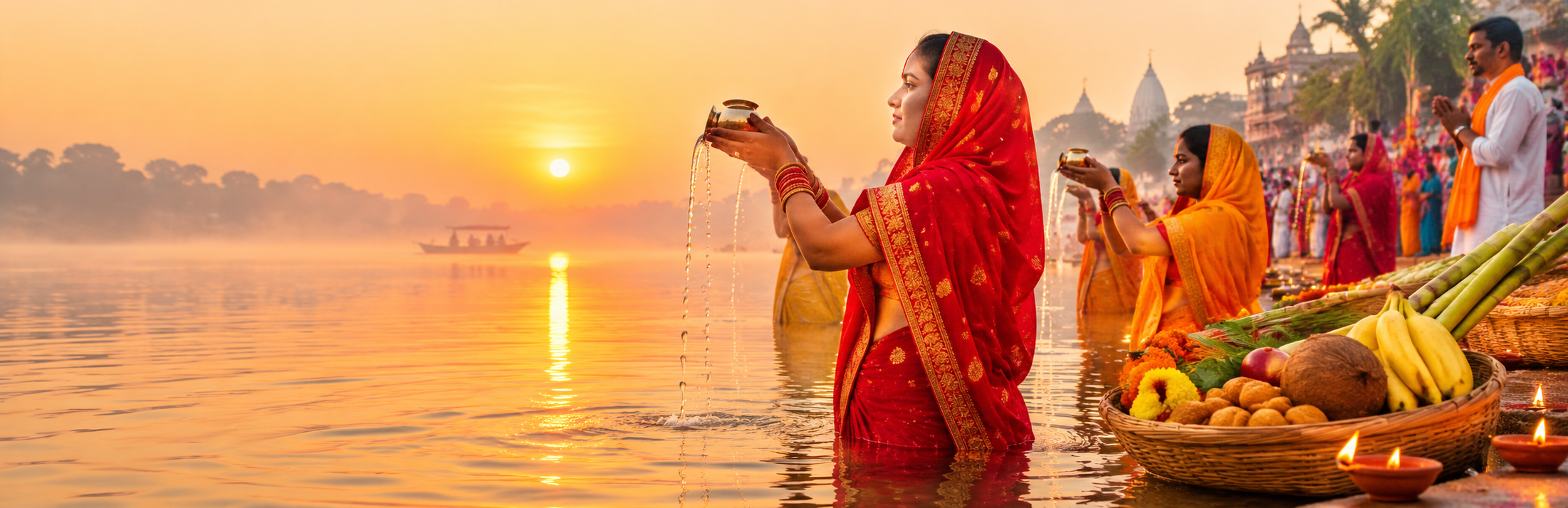
Sandhya Arghya is one of the most important rituals of Chhath Puja. It takes place on the third day, when devotees gather near rivers, ponds, lakes and other water bodies to offer prayers to the setting sun.
Families carry beautifully arranged bamboo baskets filled with fruits, sugarcane, coconuts, thekua and other traditional offerings.
Devotees stand in the water and offer Arghya to Lord Surya while praying for the health, prosperity and happiness of their families.
The atmosphere becomes especially beautiful with traditional Chhath songs, devotional prayers, decorated ghats and illuminated earthen lamps.
This ritual is particularly meaningful because it expresses gratitude towards the setting sun and acknowledges the importance of every phase of life.
4. Usha Arghya – Prayers to the Rising Sun
Usha Arghya is the final day of Chhath Puja and marks the conclusion of the four-day festival.
Devotees wake up early in the morning and gather near rivers or other water bodies before sunrise. They offer Arghya to the rising sun and pray for positive energy, good health and prosperity.
After completing the morning prayers, devotees conclude their fast through a traditional ritual known as Parana.
Prasad is distributed among family members, friends, neighbours and other devotees.
Usha Arghya represents new beginnings, hope, positivity and gratitude.
Traditional Chhath Puja Prasad and Offerings
Food offerings play an important role in Chhath Puja. The prasad is prepared with great care, following traditional methods and maintaining cleanliness throughout the preparation process.
Some of the most popular Chhath Puja offerings include:
Thekua
Thekua is one of the most famous traditional sweets prepared during Chhath Puja. It is generally made using wheat flour, jaggery or sugar, ghee and other ingredients according to family recipes.
Fruits
Seasonal fruits such as bananas, apples, oranges and coconuts are commonly included in the offerings.
Sugarcane
Sugarcane is an important part of Chhath Puja decorations and offerings. It is often used to decorate the worship area and traditional arrangements.
Rice Kheer
Rice kheer prepared with milk and jaggery is a popular offering, especially during the Kharna ritual.
Coconut and Other Traditional Offerings
Coconut, ginger, turmeric, radish and other seasonal produce may also be included in the traditional puja baskets.
These offerings represent purity, gratitude, agricultural prosperity and the importance of nature.
Importance of the Sun God in Chhath Puja
The Sun God, known as Surya Dev, is considered one of the most important deities in Hindu traditions. The Sun provides light, warmth and energy, making life possible on Earth.
During Chhath Puja, devotees worship the Sun God to express gratitude for these natural blessings.
The worship of both sunrise and sunset is a distinctive aspect of the festival. The setting sun represents gratitude and acceptance, while the rising sun symbolises fresh beginnings, hope and positive energy.
This unique tradition makes Chhath Puja an important celebration of nature, faith and the continuous cycle of life.
Where Is Chhath Puja Celebrated?
Chhath Puja is celebrated with immense devotion in several parts of India and neighbouring regions.
Some of the major places known for their Chhath Puja celebrations include:
Bihar: Chhath Puja is one of the most important festivals in Bihar, celebrated across cities, towns and villages.
Jharkhand: Devotees gather near rivers, ponds and lakes to perform traditional rituals.
Uttar Pradesh: Eastern Uttar Pradesh observes the festival with great enthusiasm and community participation.
Delhi: Large gatherings take place near rivers, ponds and specially arranged ghats.
Nepal: Chhath Puja is celebrated by Hindu communities, particularly in the Terai region.
Other Indian Cities: Cities such as Mumbai, Kolkata, Surat and Ahmedabad also witness celebrations organised by communities following Chhath traditions.
The festival has also gained recognition among Indian communities living in different countries around the world.
Cultural and Environmental Importance of Chhath Puja
Chhath Puja is not only a religious celebration but also an important expression of cultural heritage and environmental awareness.
The festival encourages people to connect with rivers, ponds and natural surroundings. Devotees gather at water bodies, clean their surroundings and participate in community activities.
Its traditional practices highlight several important values:
Respect for Nature: Worshipping the Sun and offering prayers near water bodies reflect the importance of natural resources.
Community Unity: Families, neighbours and communities come together to organise celebrations and support devotees.
Cultural Preservation: Traditional songs, food preparations, rituals and customs help preserve regional heritage.
Discipline and Dedication: Fasting and religious observances encourage patience, commitment and self-discipline.
Chhath Puja reminds people that protecting nature and respecting natural resources are essential for future generations.
How Is Chhath Puja Celebrated in Modern Times?
Although Chhath Puja has ancient roots, its popularity continues to grow in modern India.
People living away from their hometowns also organise celebrations in their cities and residential communities. Temporary ghats, decorated water bodies, traditional music and community gatherings help devotees maintain their cultural traditions.
Social media has also made it easier for families to share Chhath Puja wishes, photographs, videos and devotional messages with relatives and friends.
Despite changing lifestyles, the central values of the festival remain the same: devotion, gratitude, purity, family well-being and respect for nature.
Frequently Asked Questions About Chhath Puja
1. Why is Chhath Puja celebrated?
Chhath Puja is celebrated to worship Lord Surya and Chhathi Maiya. Devotees pray for good health, happiness, prosperity and the well-being of their families.
2. How many days is Chhath Puja celebrated?
Chhath Puja is traditionally celebrated over four days: Nahay Khay, Kharna, Sandhya Arghya and Usha Arghya.
3. Which God is worshipped during Chhath Puja?
Lord Surya, the Sun God, and Chhathi Maiya are worshipped during Chhath Puja.
4. Why do devotees worship the setting and rising sun?
The setting sun represents gratitude, while the rising sun symbolises hope, renewal and new beginnings. Worshipping both reflects the importance of every phase of life.
5. What is the famous prasad of Chhath Puja?
Thekua is one of the most popular traditional sweets prepared during Chhath Puja. Other offerings include fruits, coconut, rice kheer and sugarcane.
6. Which states celebrate Chhath Puja in India?
Chhath Puja is especially popular in Bihar, Jharkhand, Uttar Pradesh and several other Indian states, including Delhi, Maharashtra and West Bengal.
7. What is the meaning of Arghya in Chhath Puja?
Arghya refers to the ritual offering of water and other traditional offerings to the Sun God as a symbol of devotion, respect and gratitude.
Conclusion
Chhath Puja is a beautiful celebration of faith, devotion, nature and cultural traditions. Its four-day observance reflects the importance of purity, patience, discipline and gratitude towards the Sun God.
From Nahay Khay and Kharna to Sandhya Arghya and Usha Arghya, every ritual carries a meaningful message about family well-being, spiritual dedication and respect for nature.
As generations continue to celebrate this ancient festival, Chhath Puja remains an important part of India's cultural heritage. It reminds everyone to appreciate the blessings of nature, value family relationships and welcome every new beginning with hope and positivity.
May Lord Surya and Chhathi Maiya bless everyone with good health, happiness, peace and prosperity.