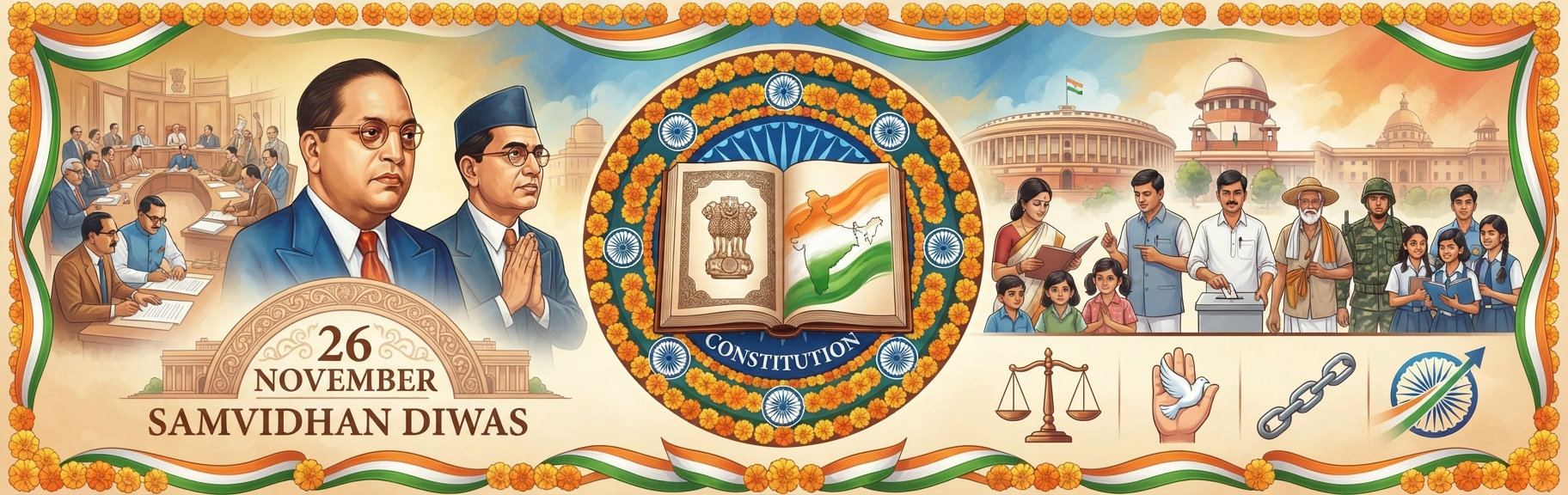
Constitution Day of India, also known as Samvidhan Diwas, is celebrated every year on 26 November to honour the adoption of the Constitution of India. This important national occasion reminds citizens of the values of justice, liberty, equality and fraternity that form the foundation of Indian democracy.
The day highlights the importance of constitutional rights, democratic responsibilities and the principles that guide the world's largest democracy. It also recognises the remarkable contribution of Dr. B. R. Ambedkar and the members of the Constituent Assembly in shaping the Constitution of independent India.
When Is Constitution Day Celebrated in India?
Constitution Day is observed annually on 26 November across India. On this date in 1949, the Constituent Assembly formally adopted the Constitution of India. However, it officially came into effect on 26 January 1950, a date celebrated every year as Republic Day.
The Government of India officially declared 26 November as Constitution Day in 2015 to promote awareness about the Constitution and its fundamental principles among citizens.
History of Constitution Day of India
The history of Constitution Day is closely connected with India's journey towards independence and the establishment of a democratic republic.
After gaining independence on 15 August 1947, India needed a comprehensive constitutional framework to govern the country. The Constituent Assembly was responsible for preparing this important document.
The Drafting Committee was established on 29 August 1947, with Dr. B. R. Ambedkar appointed as its chairman. After extensive discussions, debates and revisions, the Constitution was adopted on 26 November 1949.
It came into force on 26 January 1950, marking the beginning of India as a sovereign democratic republic.
Who Is the Father of the Indian Constitution?
Dr. B. R. Ambedkar is widely recognised as the Father of the Indian Constitution because of his significant contribution as the chairman of the Drafting Committee.
He played a major role in developing a constitutional framework based on equality, social justice, individual liberty and democratic principles.
His vision helped establish constitutional protections for citizens and promote equal opportunities regardless of caste, religion, gender or social background. His contribution remains an essential part of India's democratic history.
Importance and Significance of Constitution Day
Constitution Day is more than a historical remembrance. It is an opportunity for citizens to understand the principles that protect democracy and promote responsible citizenship.
The major significance of this day includes:
The day encourages citizens to learn about the Constitution, understand their rights and recognise their responsibilities towards the nation.
2. Strengthening Indian Democracy
The Constitution provides the foundation for India's democratic system. It establishes the structure of government and ensures that public institutions function according to constitutional principles.
It supports equal treatment, social justice and protection against discrimination, helping build a fair and inclusive society.
4. Understanding Fundamental Rights and Duties
Constitution Day reminds citizens that enjoying constitutional rights also comes with responsibilities towards society and the country.
5. Honouring the Constitution Makers
The occasion pays tribute to Dr. B. R. Ambedkar and all the members of the Constituent Assembly who contributed to preparing the Constitution.
The Preamble of the Indian Constitution
The Preamble of the Constitution of India is considered the introduction to the Constitution. It explains the fundamental philosophy, objectives and values on which the country is governed.
It begins with the famous words, "We, the People of India," highlighting that the ultimate authority of the Constitution comes from the people.
The Preamble establishes five important ideals:
Sovereign: India is an independent nation with the authority to make its own decisions.
Socialist: The country aims to promote social and economic equality.
Secular: All religions receive equal respect and freedom.
Democratic: Citizens have the right to elect their representatives.
Republic: The head of the country is elected rather than inheriting the position.
It also promises justice, liberty, equality and fraternity to all citizens.
Fundamental Rights Under the Indian Constitution
One of the most important features of the Indian Constitution is the provision of Fundamental Rights. These rights protect individual freedom and ensure equal treatment under the law.
The Constitution currently provides six broad categories of Fundamental Rights:
Right to Equality (Articles 14–18): Ensures equality before the law and prohibits discrimination.
Right to Freedom (Articles 19–22): Protects important freedoms, including speech and expression.
Right Against Exploitation (Articles 23–24): Prohibits human trafficking, forced labour and certain forms of child labour.
Right to Freedom of Religion (Articles 25–28): Protects religious freedom.
Cultural and Educational Rights (Articles 29–30): Protects the cultural and educational interests of minorities.
Right to Constitutional Remedies (Article 32): Allows citizens to approach the Supreme Court to enforce Fundamental Rights.
These rights form an essential foundation for individual liberty and democratic governance in India.
Fundamental Duties of Indian Citizens
Along with Fundamental Rights, the Indian Constitution also highlights the responsibilities of citizens through Fundamental Duties under Article 51A.
These duties encourage citizens to respect the Constitution, follow its ideals, protect national unity and contribute positively to society.
Some important Fundamental Duties include:
Respecting the Constitution, National Flag and National Anthem.
Protecting the sovereignty, unity and integrity of India.
Promoting harmony and brotherhood among all citizens.
Preserving India's cultural heritage.
Protecting the natural environment.
Developing scientific temper and a spirit of inquiry.
Safeguarding public property.
Striving towards excellence in all fields.
Constitution Day reminds everyone that responsible citizenship is essential for a strong and progressive nation.
How Is Constitution Day Celebrated in India?
Constitution Day is observed through educational, cultural and awareness activities organised by government institutions, schools, colleges and other organisations.
Common activities include:
Reading the Preamble: Citizens and students read the Preamble to understand the core values of the Constitution.
Educational Programmes: Schools and colleges organise discussions, speeches and presentations about constitutional history.
Essay Writing Competitions: Students participate in competitions based on democracy, equality and constitutional values.
Constitutional Awareness Campaigns: Government departments conduct activities to educate people about their rights and duties.
Online Constitution Quizzes: Digital quizzes help citizens learn about the Indian Constitution and its history.
Tributes to Dr. B. R. Ambedkar: People remember his contribution to the making of the Constitution.
These activities encourage greater public participation and strengthen awareness of India's democratic principles.
Why Should Every Indian Know About the Constitution?
The Constitution is not just a legal document; it is the foundation of India's democratic identity. It defines how the country is governed, protects citizens' rights and establishes responsibilities for individuals and institutions.
Understanding the Constitution helps people become more informed citizens. It encourages respect for diversity, equality, freedom and justice while promoting peaceful participation in democratic processes.
For students, young people and future generations, constitutional education is especially important because it develops awareness of civic responsibilities and national values.
Conclusion
Constitution Day of India is an important occasion to celebrate the adoption of the Constitution and honour the vision of the leaders who helped shape modern India.
Observed every year on 26 November, Samvidhan Diwas encourages citizens to understand their Fundamental Rights, perform their Fundamental Duties and respect the principles of democracy, justice, liberty, equality and fraternity.
The Constitution belongs to every Indian citizen. Understanding its values and applying them in everyday life can help build a stronger, more inclusive and democratic India.
Let us celebrate Constitution Day by respecting our Constitution, understanding our responsibilities and contributing towards a better future for India.