The International Day for the Elimination of Violence Against Women is observed every year on November 25 to raise awareness about violence against women and girls worldwide. This important international observance highlights the need to protect women's rights, promote gender equality, and create a society where every woman can live safely, freely, and with dignity.
Violence against women remains a serious global human rights issue. It can occur in homes, workplaces, educational institutions, public spaces, and online environments. The day encourages governments, organisations, communities, and individuals to take meaningful action to prevent violence, support survivors, and challenge discrimination.
Observed globally, November 25 marks the beginning of the 16 Days of Activism Against Gender-Based Violence, an international campaign dedicated to ending violence against women and girls.
What Is the International Day for the Elimination of Violence Against Women?
The International Day for the Elimination of Violence Against Women is a United Nations observance dedicated to addressing all forms of violence against women and girls.
The day highlights the importance of equal rights, personal safety, freedom, and protection from abuse. It also encourages people to recognise that violence against women is not simply a personal or family matter but a social issue that requires collective responsibility.
The observance focuses on preventing different forms of violence, including:
Domestic violence and physical abuse.
Sexual harassment and sexual violence.
Emotional and psychological abuse.
Human trafficking and exploitation.
Child marriage and harmful traditional practices.
Cyberbullying and online harassment.
Gender-based discrimination and violence.
Through awareness programmes, educational campaigns, public discussions, and community initiatives, this day promotes a world where women and girls can enjoy equal opportunities and live without fear.
History of the International Day for the Elimination of Violence Against Women
The history of this observance is connected to the struggle for women's rights and justice.
November 25 was selected in memory of the Mirabal sisters of the Dominican Republic: Patria, Minerva, and María Teresa Mirabal. They were political activists who strongly opposed the dictatorship of Rafael Trujillo.
On November 25, 1960, the three sisters were assassinated because of their opposition to the regime. Their tragic deaths became a symbol of resistance against oppression and violence.
In 1981, women's rights activists across Latin America and the Caribbean began observing November 25 as a day to raise awareness about violence against women.
Later, in 1993, the United Nations General Assembly adopted the Declaration on the Elimination of Violence Against Women, recognising violence against women as a violation of human rights.
In 1999, the United Nations officially designated November 25 as the International Day for the Elimination of Violence Against Women through Resolution 54/134.
Since then, the day has been observed internationally to encourage stronger laws, awareness, prevention, and support for survivors.
Significance of November 25
The International Day for the Elimination of Violence Against Women carries significant importance because violence continues to affect women's safety, health, education, employment, and freedom.
Its major objectives include:
1. Raising Global Awareness
The day encourages people to understand the different forms of violence against women and recognise their impact on individuals, families, and communities.
2. Protecting Women's Human Rights
Every woman deserves the right to live without discrimination, abuse, intimidation, or exploitation. This observance promotes equality and fundamental human rights.
3. Encouraging Gender Equality
Gender equality is essential for building a fair and inclusive society. Ending violence against women requires challenging harmful stereotypes and discriminatory practices.
4. Supporting Survivors
The day highlights the importance of providing survivors with access to healthcare, legal assistance, counselling, protection, and rehabilitation services.
5. Promoting Stronger Laws and Policies
Governments and institutions are encouraged to strengthen legal protections, improve reporting systems, and ensure justice for survivors.
What Is the Orange the World Campaign?
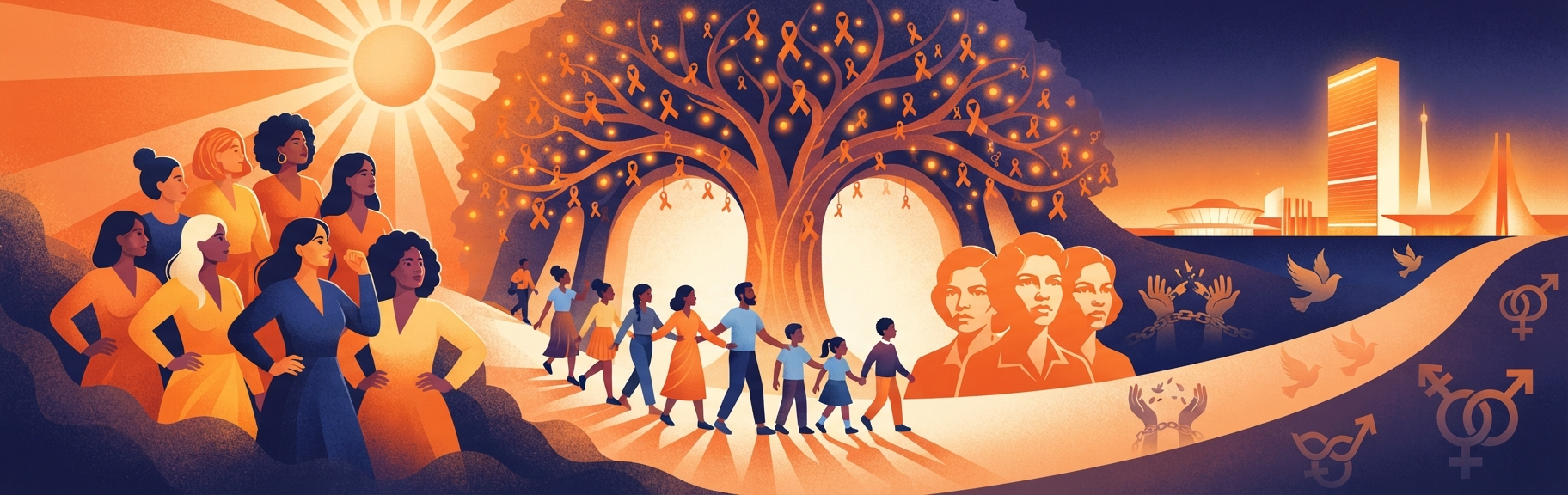
Orange the World is a global awareness campaign led by UN Women as part of the 16 Days of Activism Against Gender-Based Violence.
The colour orange represents a brighter future free from violence against women and girls. During this campaign, people and organisations use orange-themed activities to spread awareness and encourage action.
Common campaign activities include:
Lighting public buildings and landmarks in orange.
Organising awareness walks and community events.
Conducting educational programmes in schools and colleges.
Sharing awareness messages on social media.
Encouraging conversations about women's safety.
Supporting organisations that assist survivors.
The campaign runs from November 25, the International Day for the Elimination of Violence Against Women, until December 10, Human Rights Day.
How Can We Prevent Violence Against Women?
Ending violence against women requires continuous efforts from individuals, families, communities, organisations, and governments.
Some important steps include:
1. Promote Education and Awareness
Educating children and young people about equality, respect, consent, and healthy relationships can help prevent harmful behaviour.
2. Challenge Gender Stereotypes
Society must challenge beliefs and traditions that encourage discrimination, inequality, or control over women.
3. Encourage Reporting and Support
Survivors should feel safe when reporting abuse. Families and communities must listen without judgement and help them access professional support.
4. Strengthen Women's Safety
Workplaces, educational institutions, public transportation, and digital platforms should provide safe environments for women and girls.
5. Use Social Media Responsibly
Social media can spread awareness, challenge harmful attitudes, and connect survivors with support services. Online harassment and abuse must also be addressed.
6. Support Women's Rights Organisations
Supporting organisations that work towards women's empowerment, legal assistance, education, and protection can contribute to long-term social change.
Role of Society in Ending Gender-Based Violence
Creating a violence-free society is not only the responsibility of governments or women's organisations. Every individual has a role to play.
Parents can teach children mutual respect and equality. Schools can create safe learning environments. Employers can establish strong policies against harassment and discrimination. Communities can challenge harmful practices and support people experiencing abuse.
Men and boys also play an important role by promoting respectful behaviour, challenging gender-based discrimination, and standing against violence.
A society becomes stronger when women and girls have equal opportunities, freedom, security, and access to justice.
International Day for the Elimination of Violence Against Women: Awareness Messages
Here are some meaningful messages to share on November 25:
Every woman deserves to live with dignity, freedom, and respect.
Stop violence against women. Start building a safer world.
Equality begins with respect and ends with discrimination.
Raise your voice against abuse and stand for women's rights.
A violence-free society is a better future for everyone.
Empower women, protect their rights, and respect their choices.
Silence should never protect violence. Awareness and action can create change.
Conclusion
The International Day for the Elimination of Violence Against Women reminds the world that protecting women's rights and ensuring their safety must remain a global priority.
Observed every year on November 25, this day encourages people to speak against abuse, challenge discrimination, support survivors, and promote gender equality.
Ending violence requires more than a single day of awareness. It requires continuous education, stronger protection systems, equal opportunities, and collective action.
Every individual can contribute to creating a world where women and girls are respected, protected, and free to live without fear.