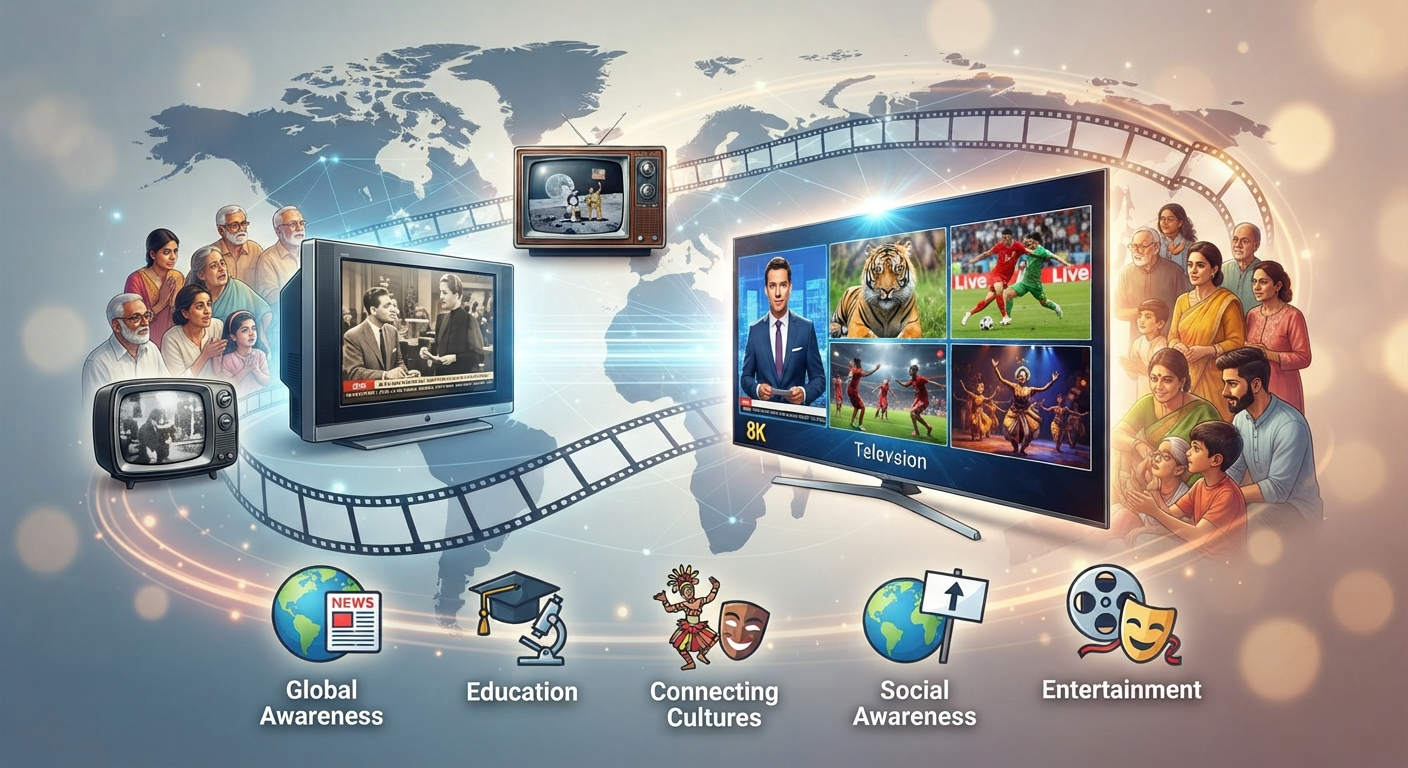
World Television Day is celebrated every year on November 21 to recognize the importance of television as a powerful medium of communication, education, entertainment, and information. Television has played a significant role in shaping modern society by connecting people with global events, cultural traditions, technological developments, and important social issues.
From breaking news and educational documentaries to movies, sports, and entertainment programs, television continues to influence how people understand and experience the world. Although digital platforms and online streaming services have transformed media consumption, television remains an important source of information and entertainment for millions of people worldwide.
What Is World Television Day?
World Television Day is an international observance established by the United Nations to highlight the influence of television on public awareness, communication, and global development.
The day recognizes television not only as an entertainment device but also as an important communication platform that helps people understand different perspectives, cultures, and international developments.
Every year on November 21, media organizations, broadcasters, educational institutions, and communities recognize the contribution of television to society.
When Is World Television Day Celebrated?
World Television Day is celebrated annually on November 21.
The United Nations General Assembly officially proclaimed November 21 as World Television Day on December 17, 1996, following the first World Television Forum held on November 21 and 22, 1996.
The observance highlights the importance of television in promoting communication, sharing information, and encouraging international cooperation.
History of World Television Day
The history of World Television Day is connected to the growing influence of television during the twentieth century.
Television technology transformed communication by allowing people to watch news, educational programs, cultural events, and entertainment directly from their homes.
In 1996, the United Nations organized the first World Television Forum to discuss the increasing impact of television on global communication and decision-making.
Recognizing its importance, the United Nations General Assembly adopted Resolution 51/205 on December 17, 1996, officially declaring November 21 as World Television Day.
Since then, the day has been observed internationally to recognize television's contribution to communication, education, and social development.
Why Is World Television Day Celebrated?
World Television Day celebrates the role of television in bringing information and entertainment to people across different countries and communities.
Some important reasons behind this international observance include:
Television helps people stay informed about international news, political developments, environmental challenges, and important social issues.
2. Supporting Education
Educational television programs, documentaries, and informative broadcasts make learning accessible to people of different age groups.
3. Connecting Different Cultures
Television introduces viewers to different traditions, languages, lifestyles, and cultural celebrations from around the world.
4. Encouraging Social Awareness
Television programs can highlight important issues such as public health, climate change, gender equality, poverty, and human rights.
5. Providing Entertainment
Movies, television shows, reality programs, sports events, and music performances make television an important source of entertainment.
Importance of Television in Modern Society
Television continues to play an important role in modern society despite the rapid growth of digital media and internet-based entertainment.
Its influence can be seen across several areas:
News and Information: Television provides real-time updates about national and international events.
Education: Educational channels support students, teachers, and lifelong learners.
Entertainment: Television offers movies, series, sports, music, and cultural programming.
Advertising: Businesses use television advertising to introduce products and reach wider audiences.
Public Awareness: Awareness campaigns help communicate important social and environmental messages.
Emergency Communication: Television broadcasts important information during natural disasters and public emergencies.
Evolution of Television Technology
Black and White Television
Early television sets displayed images in black and white. They introduced a completely new way for people to experience news and entertainment.
Colour Television
Colour television improved the viewing experience by introducing realistic colours and making programs more engaging.
LED and LCD Television
LED and LCD technologies introduced thinner screens, improved picture quality, and more energy-efficient television sets.
Smart Television
Smart TVs transformed traditional television by connecting viewers to internet-based entertainment, streaming platforms, applications, and online content.
4K and 8K Television
Modern 4K and 8K televisions offer higher screen resolutions, sharper images, and advanced viewing experiences.
The Future of Television
The future of television is closely connected to technological innovation and changing viewer preferences.
Artificial intelligence, voice-controlled features, ultra-high-definition displays, interactive content, and personalized entertainment are transforming the television experience.
Smart televisions are also becoming more integrated with connected home devices and digital entertainment ecosystems.
As technology continues to develop, television is expected to remain an important platform for information, communication, and entertainment.
Conclusion
World Television Day is an opportunity to appreciate the contribution of television to global communication, education, entertainment, and social awareness.
From traditional broadcasting to modern smart television technology, television has continuously adapted to changing lifestyles and technological advancements.
Celebrated every year on November 21, this international observance reminds us of the importance of responsible broadcasting, reliable information, and media that connects people across the world.